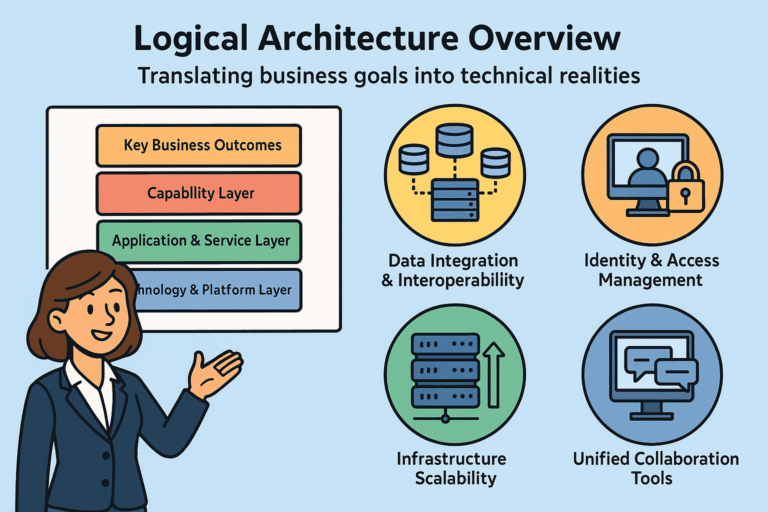

Unlike conceptual or physical architectures, logical architecture shows the structure of IT capabilities, processes, and interactions, defining how system components work and function. It shows IT what needs done to support business strategy without identifying specific technologies.
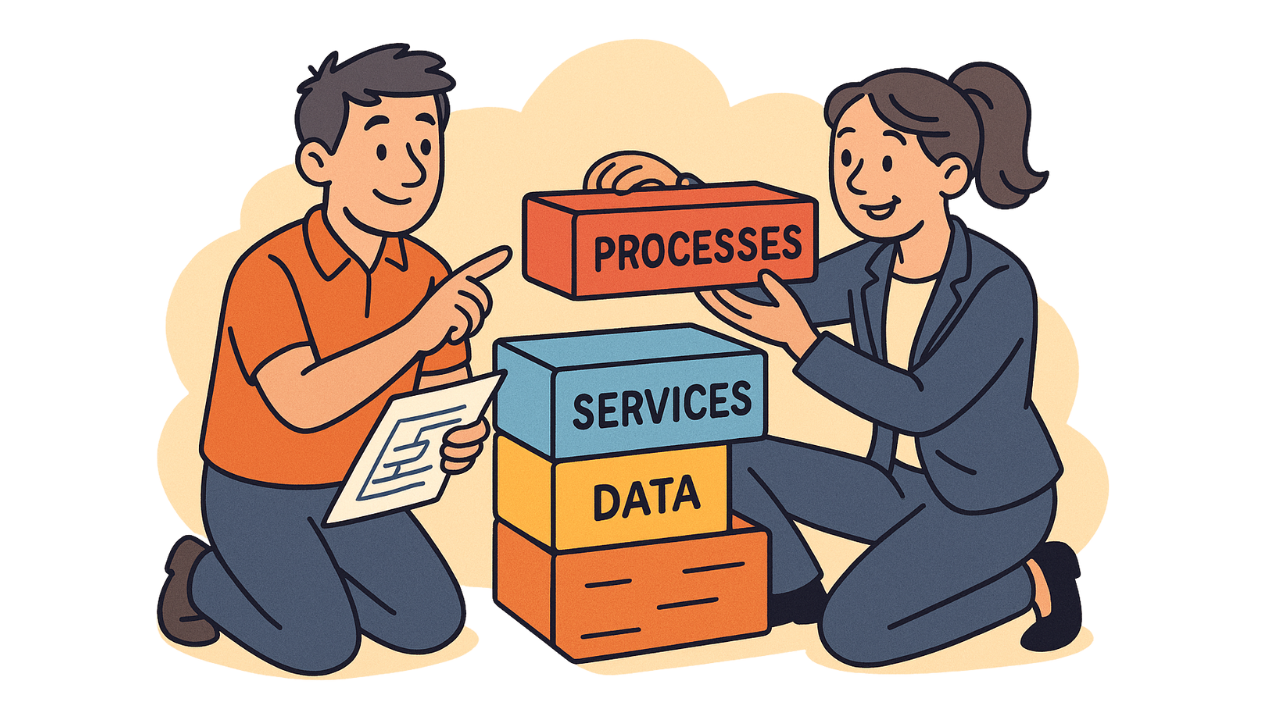
Logical IT architecture breaks down the system into layers, services, and data flows, providing more technical structure guiding teams in planning and execution. Once defined, logical IT architecture provides business benefits that go beyond technical design.
Business benefits of Logical IT Architecture:
Business Processes Alignment with IT
Logical IT architecture maps capabilities like customer data management, billing, and analytics directly to business processes, ensuring IT investments target what the business actually needs. For example, a telecom company might use logical IT architecture to map how customer onboarding, billing, and service management systems should interact. By identifying overlaps, they can streamline processes, reduce onboarding time for new customers, and realize cost savings in their operations.
Facilitates Informed Decision Making
Logical IT architecture describes what needs to happen functionally, before deciding how or with which vendor. This helps leaders avoid vendor bias, and make informed technology choices aligned with capability and process requirements. Leaders can also evaluate potential outcomes without committing to specific technologies, thereby reducing risk by showing downstream impact.
Integration of Complex Environments
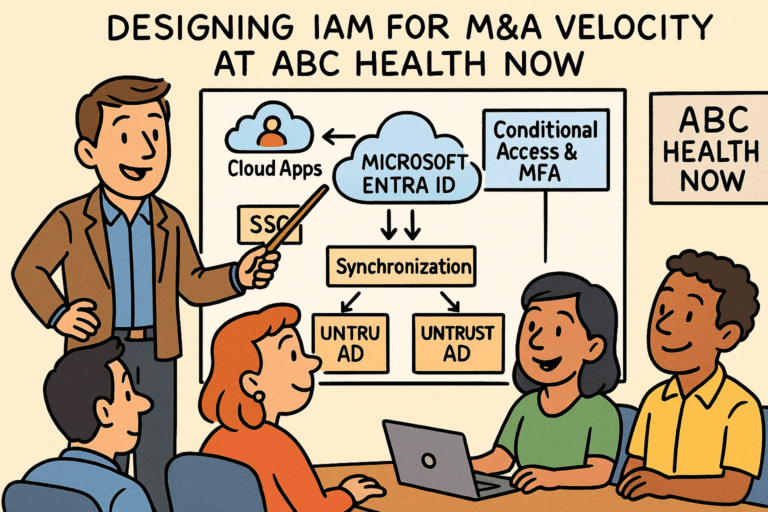
Businesses commonly run multiple applications across organizational silos. Logical IT architecture defines how these should integrate supporting end-to-end processes. By taking a technology-agnostic approach, integration points become clear. This clarity allows disparate teams to work and communicate more effectively. Imagine a scenario where a banking merger occurs. In that instance, logical IT architecture can be used to design how core banking, mobile applications, and CRM (Customer Relationship Management) systems would work together in the new organization. This prevents fragmented customer experiences ensuring a unified view of accounts.
Improves Agility and Scalability
Logical IT architecture organizes IT into discrete, reusable capabilities like “customer authentication”, and “order tracking”, letting organizations scale individual functions instead of entire systems. Using this modular design, the architecture supports faster scaling and adaptation to business and regulatory changes, while making cloud and automation adoption far less disruptive. For example, a retail chain can leverage logical IT architecture to unify in-store POS systems with e-commerce data, ensuring consistent promotions, and inventory visibility across all channels.
Stronger Partnership Between Business and IT
Logical models translate complex IT systems into business-friendly terms helping bridge gaps between IT and business language. This way business stakeholders see what IT enables, and IT teams understand why it matters to the business.
This is crucial when illustrating IT capabilities through logical IT architecture in executive briefings or strategy sessions. Instead of talking in terms of “servers” and “databases”, leaders discuss business functions like “shipment tracking” and “delivery optimization”. This accelerates decision-making and IT funding approvals. When a logistics company shifted the dialogue from technical terms like “database clusters” to business outcomes like “delivery times”, executives quickly understood the value of IT and approved funding for a system integration.
Logical IT architecture translates strategy into functional interactions that run the business. In the next post, we will explore physical IT architecture, which is the specific technologies and platforms that bring these functions to life.