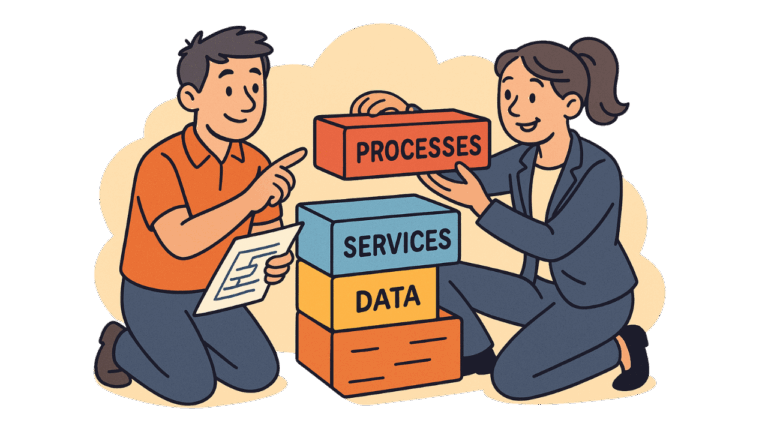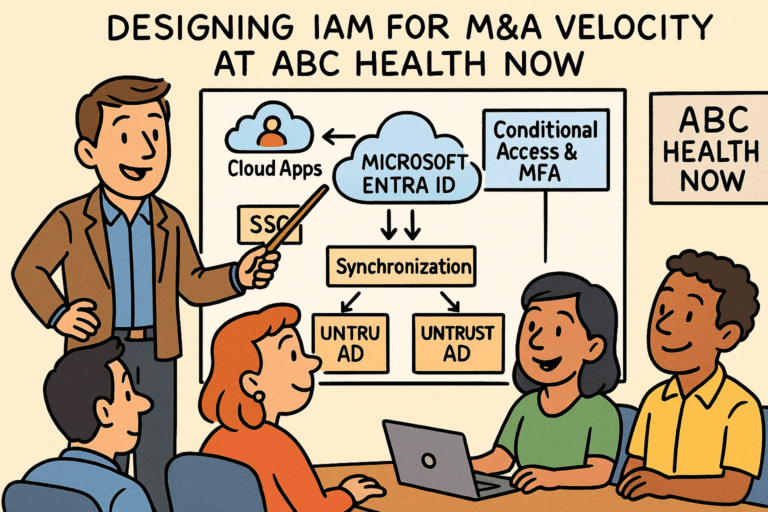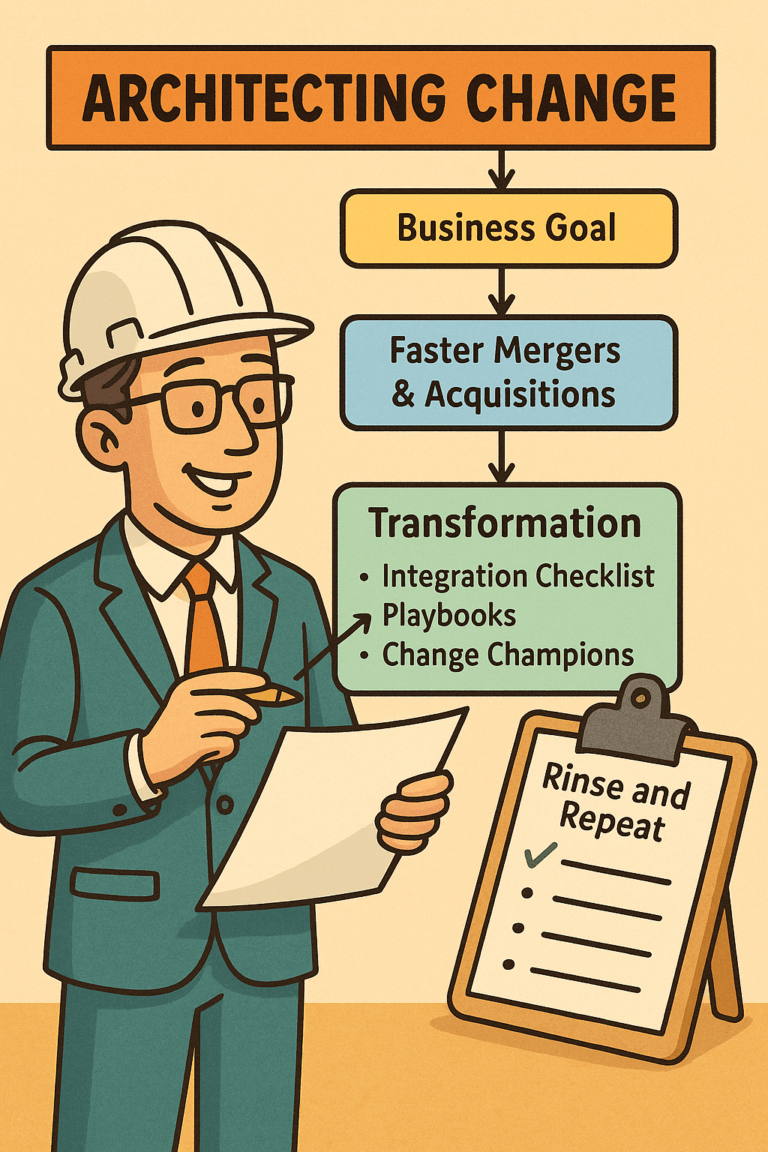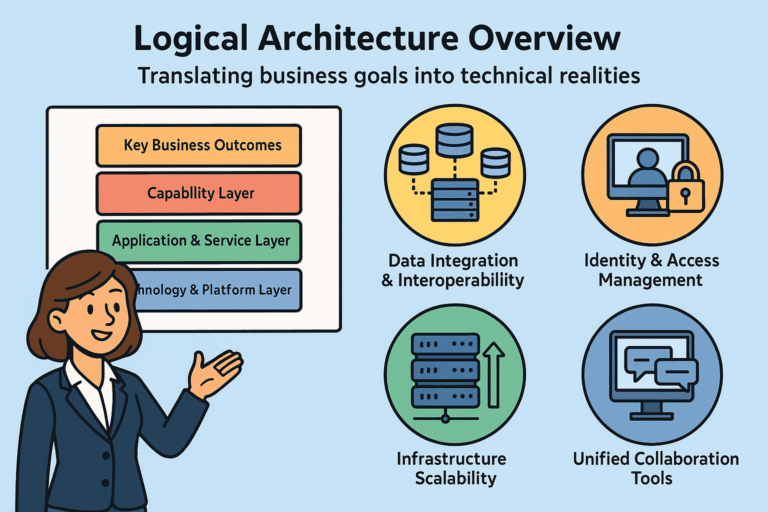


Physical IT architecture isn’t just hardware, it is the invisible engine of growth that turns strategy into reality. It powers operations, connecting IT investments to strategic objectives, ensuring technology supports business success. Without a strong physical foundation, even the best strategies, software, and digital initiatives cannot deliver business value.
Business benefits of Physical IT Architecture:
Provides the Foundation for Business Operations
Physical IT architecture is the foundation of business operations, powering applications and systems through servers, networks, storage, and devices. Its resilience and redundancy keep critical functions like finance, supply chain, and customer platforms running. Resilient and scalable infrastructure enables organizations to adapt, grow, and adopt new technologies seamlessly. Downtime directly translates into lost revenue and customer trust.
For airlines, this is essential to support critical operations such as reservations, baggage handling, flight scheduling and coordination around the clock. They rely on high availability, redundancy, and security because it is essential for smooth global operations. Without it, outages ground flights, cause delays, leading to reputational damage, and significant financial losses. This was demonstrated when a major airline’s data center outage cost over $100 million and brand damage. Weak physical IT architecture can have immediate financial and reputational consequences.
Enables Performance and Customer Experience
Business outcomes and customer experience are driven by the strength of physical IT architecture. Well-designed infrastructure keeps applications responsive, transactions seamless, and services always available. Downtime or poor performance erodes customer trust, loyalty, and revenue. Strong physical foundations turn technology into a competitive advantage, while weak ones create financial and reputational risk.
Behind Amazon’s retail dominance is a powerful physical infrastructure of distributed data centers, high-speed networks, and automated warehouses. They rely on infrastructure performance to deliver a superior customer experience because its business depends on speed, reliability, and scale. Automation, monitoring, and optimization ensure reliable performance and personalized services. This backbone ensures lightning-fast transactions and reliable order tracking. That foundation enables Amazon Prime delivery guarantees, turning IT into a direct driver of customer satisfaction and revenue.
Supports Regulatory Compliance and Security
Performance, security, and compliance work together to build lasting customer trust, as each alone is insufficient without the others. Organizations face regulations demanding strict protection of data, privacy, and system integrity. Physical IT architecture provides the foundation for meeting these requirements by ensuring sensitive information is securely stored, transmitted, and processed. Without compliant infrastructure, businesses expose themselves to fines, breaches, reputational harm, lost revenue and customer confidence. Security measures such as encrypted storage, hardened networks, and controlled access safeguard data both in transit and at rest. Functions like biometric entry, role-based permissions, and multi-factor authentication reduce the risk of unauthorized access and mitigate tampering risks. Monitoring, logging, and audit trails make compliance verifiable and help detect irregular activity quickly.
Drives Cost Efficiency
Efficient use of resources makes security and compliance sustainable at scale, and together they build the foundation of customer trust. Well-designed physical IT infrastructure minimizes waste, reduces downtime, and ensures resources are used efficiently. In contrast, outdated or poorly planned systems increase costs, and maintenance demands, creating costly operational disruptions impacting revenue and reputation. Modern architectures optimize resource utilization, lowering hardware expenses, while virtualization enables multiple applications to run on fewer machines, cutting capital costs. Redundant, reliable systems prevent outages interrupting operations leading to lost revenue. Energy-efficient designs reduce power and cooling requirements, further lowering operating costs. Standardized and updated components decrease the need for hands-on support, and limit unexpected repair expenses.
Google’s data centers are highly cost efficient due to their focus on scale, energy efficiency, automation, and custom hardware/software design. They use advanced cooling technologies to significantly reduce energy consumption and costs. By optimizing energy, cooling, and hardware utilization, Google maximizes the value of every resource. On a global scale, these efficiencies equate to millions in cost savings across operations annually.
Enables Agility and Scalability
Agility and scalability complement cost efficiency, security, performance, and customer trust by ensuring businesses can adapt quickly while remaining dependable. Without a flexible, scalable infrastructure, organizations face delayed responses, lost opportunities, and expensive system overhauls. A thoughtfully designed physical foundation enables IT teams to launch new applications and business solutions quickly. Redundant, high-capacity systems ensure sudden spikes in demand are handled smoothly without affecting performance. For example, retailers can quickly add new point-of-sale terminals or integrate e-commerce platforms without overhauling the entire infrastructure.
Physical IT architecture supports operational continuity, positive customer experiences, cost efficiency, growth, and compliance. Strong infrastructure turns IT into a strategic enabler of business value. With the physical foundation in place, the next step is to explore a real-world IT conceptual architecture.