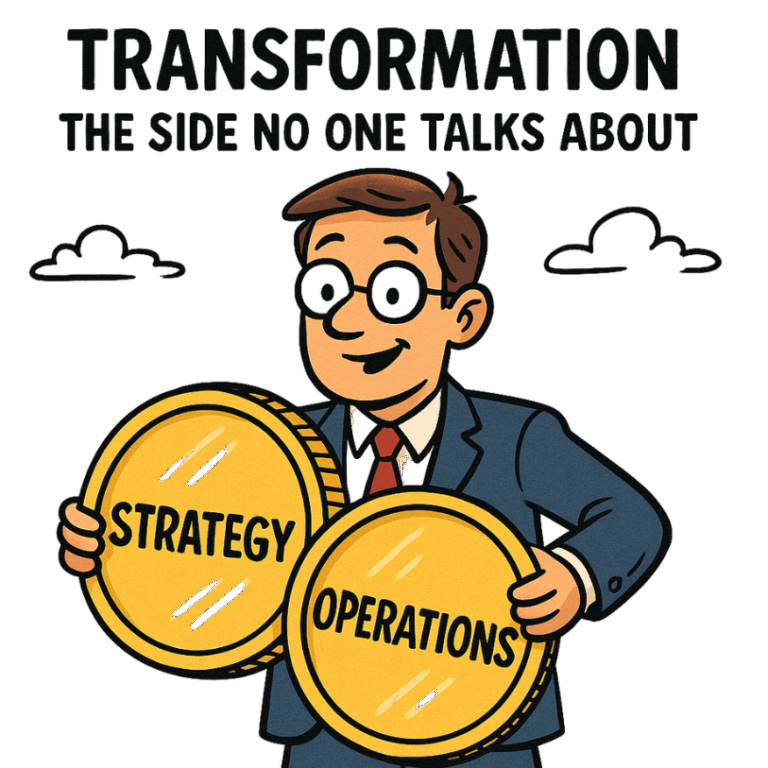
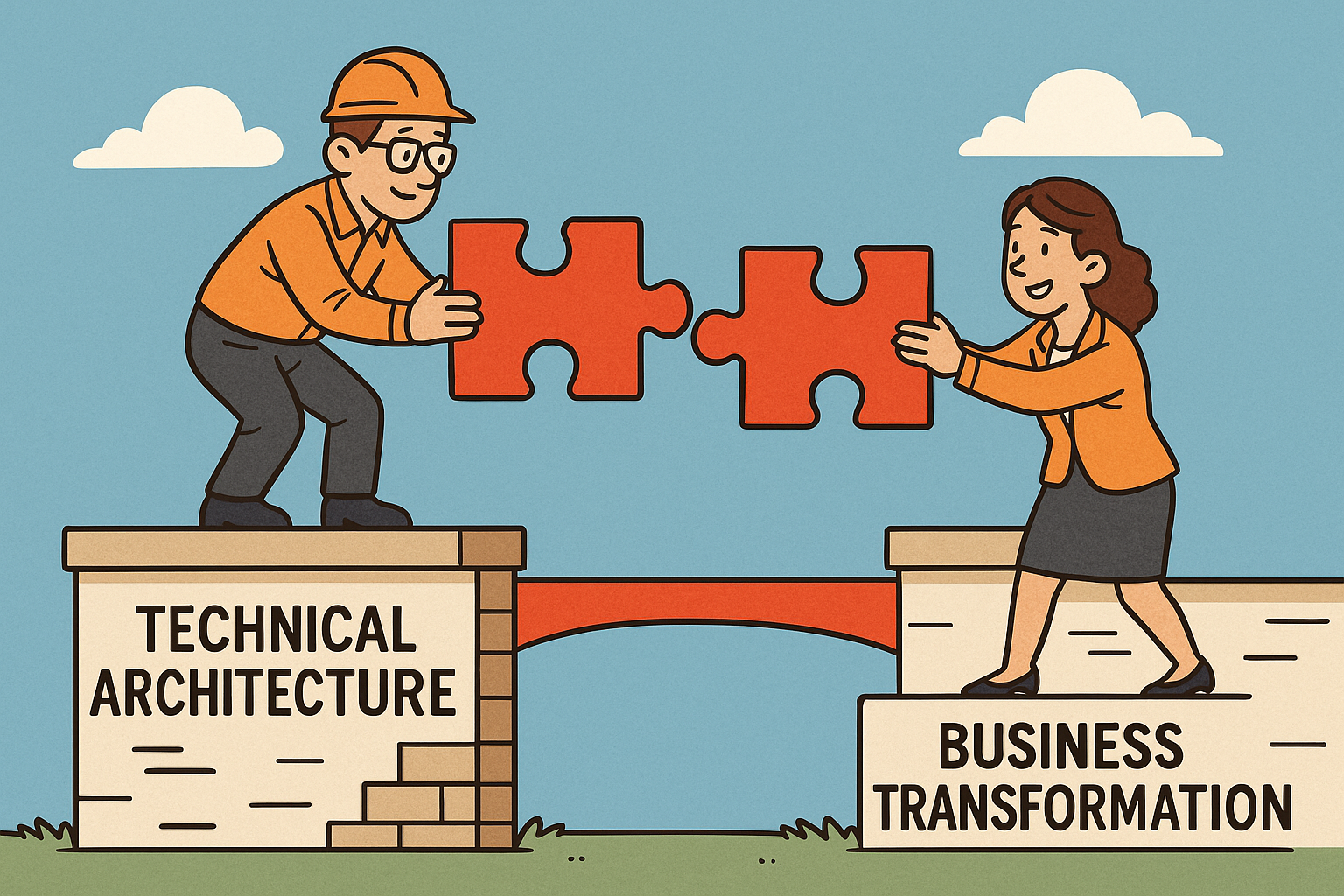

Every organization has goals it’s working to achieve, like faster growth, smoother operations, and improved customer experiences. But reaching those goals requires more than just a solid technical design or a clear vision for change. It takes both. Conceptual architecture and transformation must work together for strategy to turn into action.
Architecture outlines the essential systems, capabilities, and tools that realize the vision. Transformation explains how these elements embed into people, processes, and culture. When they are aligned, technology moves beyond a mere project to become a driver of tangible business outcomes.
To show how this plays out in practice, we’ll use a fictional healthcare organization, ABC Health Now, as an example. Like many real-world companies, they’re working to grow through mergers and acquisitions but are slowed by disconnected systems, inconsistent processes, and cultural friction. Through the lens of conceptual architecture and transformation, we’ll explore how they can overcome these challenges to scale faster and deliver stronger results.
ABC Health Now is a healthcare services & hospital management provider offering a mix of outpatient, inpatient, and telehealth services across multiple states. The company is committed to improving healthcare delivery, but faces significant headwinds in achieving its strategic objectives. The organization struggles with slow mergers and acquisitions due to outdated IT systems and fragmented operations.
Slow mergers and acquisitions delay growth, increase integration costs, and cause missed market opportunities. They also hinder the realization of operational synergies, reduce patient trust and investor confidence, weakening the company’s competitive position.
Faster mergers and acquisitions enable the organization to scale quickly, seize market opportunities, and integrate new capabilities efficiently. This goal aligns growth, operational efficiency, and competitive advantage which directly impacts brand reputation and revenue.
We have separated the summary into business challenges and impacts.
Business Challenges:
- Lengthy due diligence and approval cycles slow down acquisition timelines.
- Disconnected IT systems make post-merger integration costly and inefficient.
- Cultural and procedural differences across merged entities hinder collaboration.
- Lost opportunities to capture market share and realize synergies quickly.
Impact on Business:
- Delayed or missed growth opportunities and slower market expansion
- Higher operational and compliance costs
- Increased integration costs
- Reduced investor confidence
- Weakens the company’s competitive position
- Hinders realization of operational synergies
ABC Health Now wants to embrace change, and a comprehensive conceptual IT architecture can be a catalyst to modernize IT and operational systems, standardize care protocols, and enhance patient engagement to drive growth, improve outcomes, strengthen the patient experience, and improve revenue.
This concise summary helps highlight the importance of those business goals.
- Faster mergers and acquisitions (M&A): Accelerating M&A processes allows the organization to quickly scale, capture market opportunities, reduce integration costs, and achieve strategic growth before competitors do.
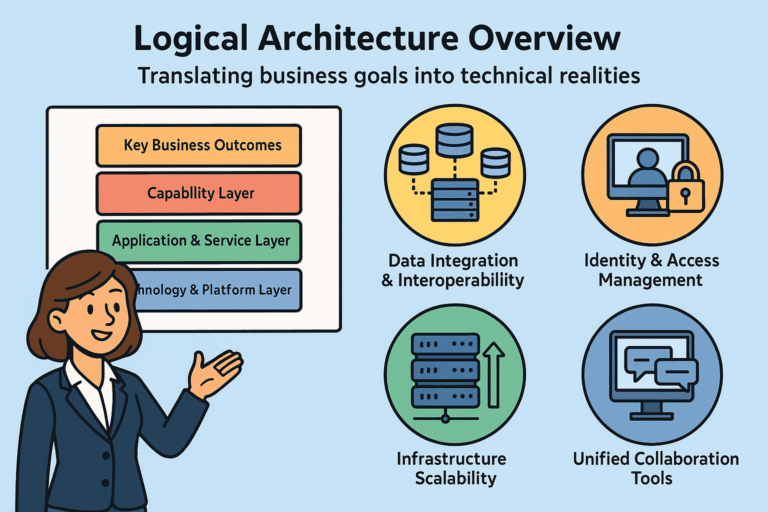
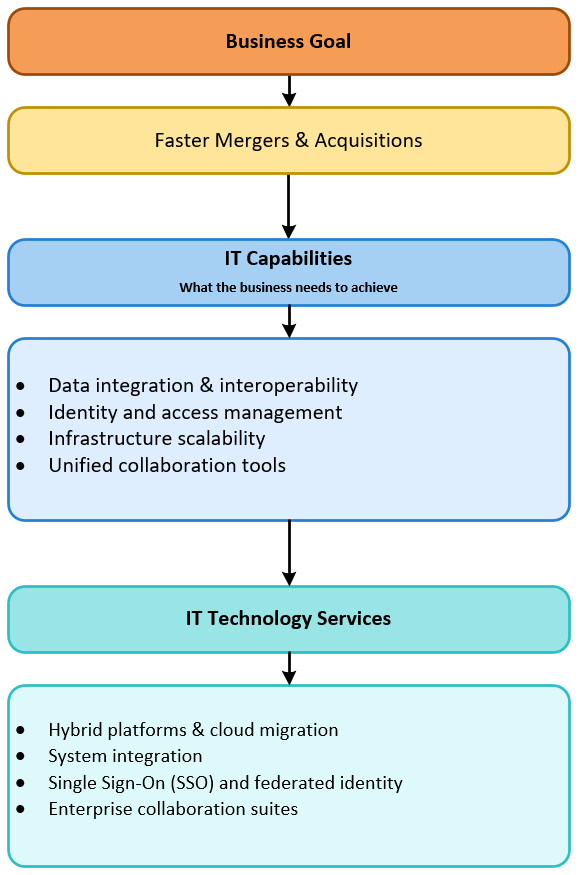
With clear definition of challenges, impacts, and goals we can create a conceptual IT architecturedirectly mapping business goals to capabilities with technologies that enable and support them.
Faster Mergers & Acquisitions
- Capabilities:
Data integration & interoperability
Data integration and interoperability enable seamless sharing and consolidation of systems, applications, and information across newly acquired entities. This reduces manual effort, minimizes errors, and accelerates the onboarding and operational alignment of merged organizations.
Identity and access management
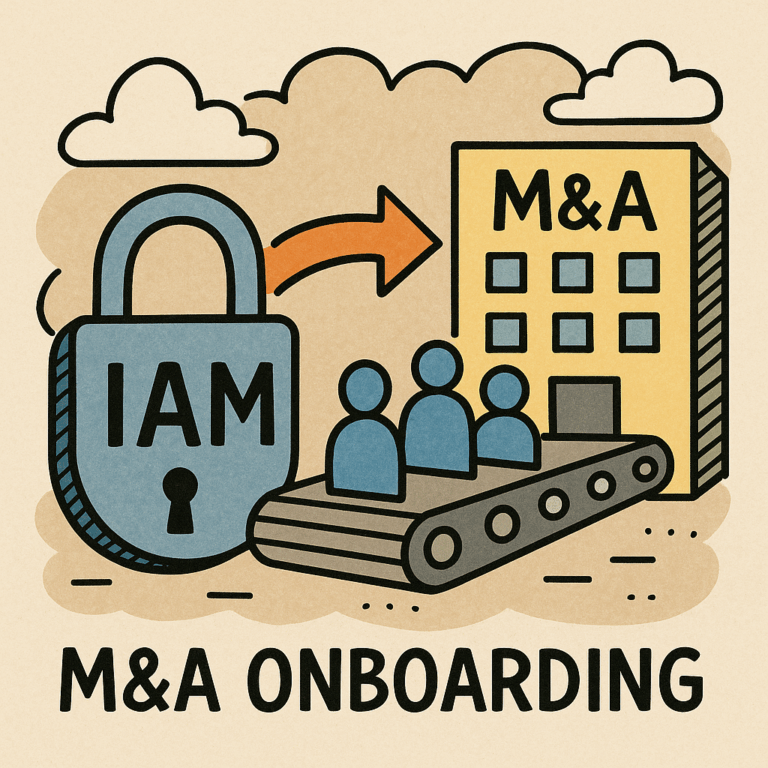
Identity and access management (IAM) streamlines the secure onboarding of new employees and systems from acquired organizations. By providing centralized authentication, role-based access, and single sign-on, IAM reduces delays and ensures immediate, controlled access to critical applications and data.
Infrastructure scalability
Scalable infrastructure allows IT systems to quickly accommodate the additional workloads, users, and applications from newly acquired organizations. This flexibility reduces the need for costly hardware upgrades and speeds up integration, enabling faster operational alignment and growth.
Unified collaboration tools
Unified collaboration tools enable employees from merged organizations to communicate, share information, and coordinate workflows seamlessly. This reduces delays caused by fragmented communication and accelerates teamwork, decision-making, and overall integration.
- Technology Services:
Hybrid platforms & cloud migration
Hybrid platforms and cloud migration provide flexible, on-demand computing and storage resources that can quickly scale to support newly acquired systems and data. This reduces deployment delays, lowers infrastructure costs, and enables faster integration and operational continuity across merged organizations.
System integration (API & middleware)
System integration through APIs and middleware enables different applications and platforms from acquired organizations to communicate and work together seamlessly. This reduces manual data transfers and compatibility issues, accelerating operational alignment and overall merger efficiency.
Single Sign-On (SSO) and Active Directory Federation
Single Sign-On (SSO) and Active Directory Federation streamline user access by allowing employees from acquired organizations to securely access multiple systems with a single set of credentials. This reduces onboarding time, minimizes access-related delays, and ensures immediate, controlled access to critical applications and data.
Enterprise collaboration suites (Microsoft 365, Teams, Zoom)
Enterprise collaboration suites like Microsoft 365, Teams, and Zoom enable seamless communication, file sharing, and project coordination across merged teams. This fosters faster decision-making, smoother workflow alignment, and more efficient integration of newly acquired organizations.
This structure shows how business strategy is translated into action, bridging goals with capabilities and technologies.
We’ll continue exploring our fictional use case in upcoming posts to illustrate how architecture and transformation work together to drive and achieve target business outcomes.