
In technology, the temptation to customize is everywhere. A script here, a firewall tweak there, or a quick PowerShell command to “just make it work.” On the surface, these fixes look like efficiency. In practice, they are ticking time bombs.
I’ve seen this play out firsthand. An organization I worked with endured a multi-month outage on their mobile applications simply because of one hidden customization.
A Real-World Example: The Firewall Rule Nobody Knew About
The story began when Apple rolled out a major iOS update. Immediately, mobile apps that relied on per-app VPN broke. Users couldn’t connect, business operations stalled, and IT scrambled.
We collaborated with Apple and our device management vendor to implement a freeze on iOS upgrades to mitigate the impact on more users. However, despite our efforts, we were unable to prevent the devices that had already undergone updates from experiencing the VPN issues.
Finally, after exhaustive log reviews, packet captures, and tracing, we uncovered the culprit: the firewall. Years earlier, someone had slipped in a custom rule that allowed the traffic to work. That person had since left the company. The rule was undocumented, fragile, and unknown to anyone else.
Once Apple transitioned to a new operating system, the customization options within the firewall appliances were rendered obsolete. This was because the customization relied on a variable within iOS to identify the device, which was no longer available with the new version. Consequently, what should have been a routine OS upgrade transformed into an operational nightmare.
The eventual fix? We upgraded our firewalls to the current release, which supported per-app VPN natively, out of the box. In other words, if we had avoided the customization in the first place, none of this chaos would have happened.
Why Customization Fails (Eventually)
This wasn’t an isolated case. In IT, the same pattern shows up repeatedly.
- Shadow Scripts and Tools: Well-meaning engineers create PowerShell scripts, Power BI automations, or custom APIs. They work until the author leaves or the platform they depend on changes.
- The “We’re Special” Syndrome: Organizations believe their needs are so unique that off-the-shelf functionality isn’t enough. So they demand modifications. Over time, those modifications pile up into brittle technical debt.
- Vendor Updates Break Everything: Apple, Microsoft, Google, and others are constantly evolving. When your environment relies on customizations, every vendor update carries risk.
The bottom line: customizations don’t scale, don’t survive turnover, and don’t evolve gracefully with the ecosystem.
The Domino Effect of Customization
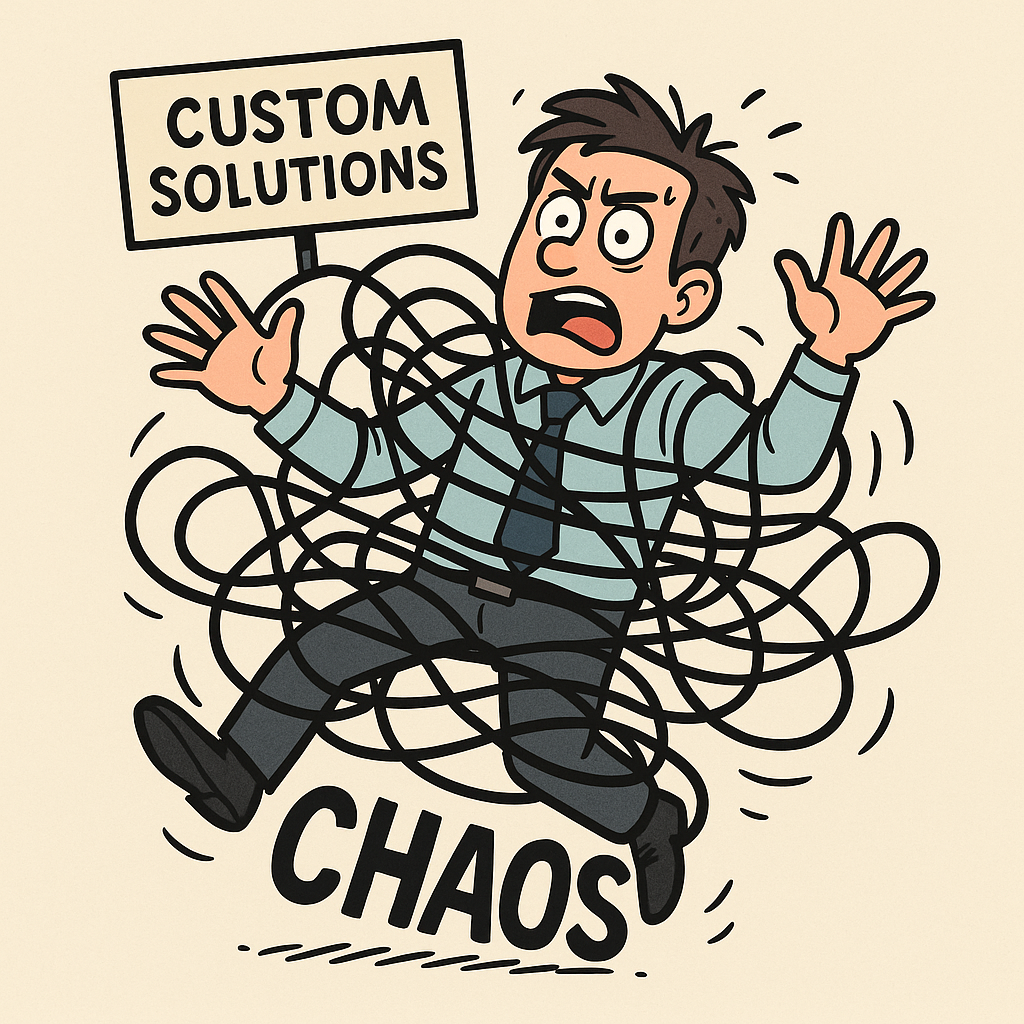
One customization rarely exists in isolation. Over time, they create an IT environment that looks like a ball of tangled yarn. When something breaks:
- Root cause analysis takes exponentially longer.
- New hires can’t understand why the system behaves the way it does.
- Every patch, update, or upgrade carries unexpected risk.
- Technical debt grows silently until it suddenly costs millions.
This is not just inefficient. It is operationally dangerous.
A Better Way: Enterprise and Outcome-Based Thinking
Instead of chasing custom fixes, IT organizations should anchor decisions in enterprise thinking and business outcomes. That means:
- Favor Out-of-the-Box Features
- Use technology as designed, leaning on vendor-supported capabilities.
- When possible, reframe business processes to align with the product, not the other way around.
- Prioritize Lifecycle Management
- Hardware, software, and infrastructure need defined refresh cycles.
- A “set it and forget it” mindset guarantees that when the world changes, your business gets left behind.
- Govern Customizations Relentlessly
- If a customization must exist, document it thoroughly, review it regularly, and assign ownership.
- Treat every customization as technical debt that must be tracked and eventually retired.
- Build Resilient Culture
- Remind leaders and engineers: you are not building “special snowflakes.” You are building systems that must endure staff turnover, vendor changes, and business evolution.
- Reward solutions that align with standards, not shortcuts.
Closing Thought
Every IT leader should have this warning taped to their monitor:
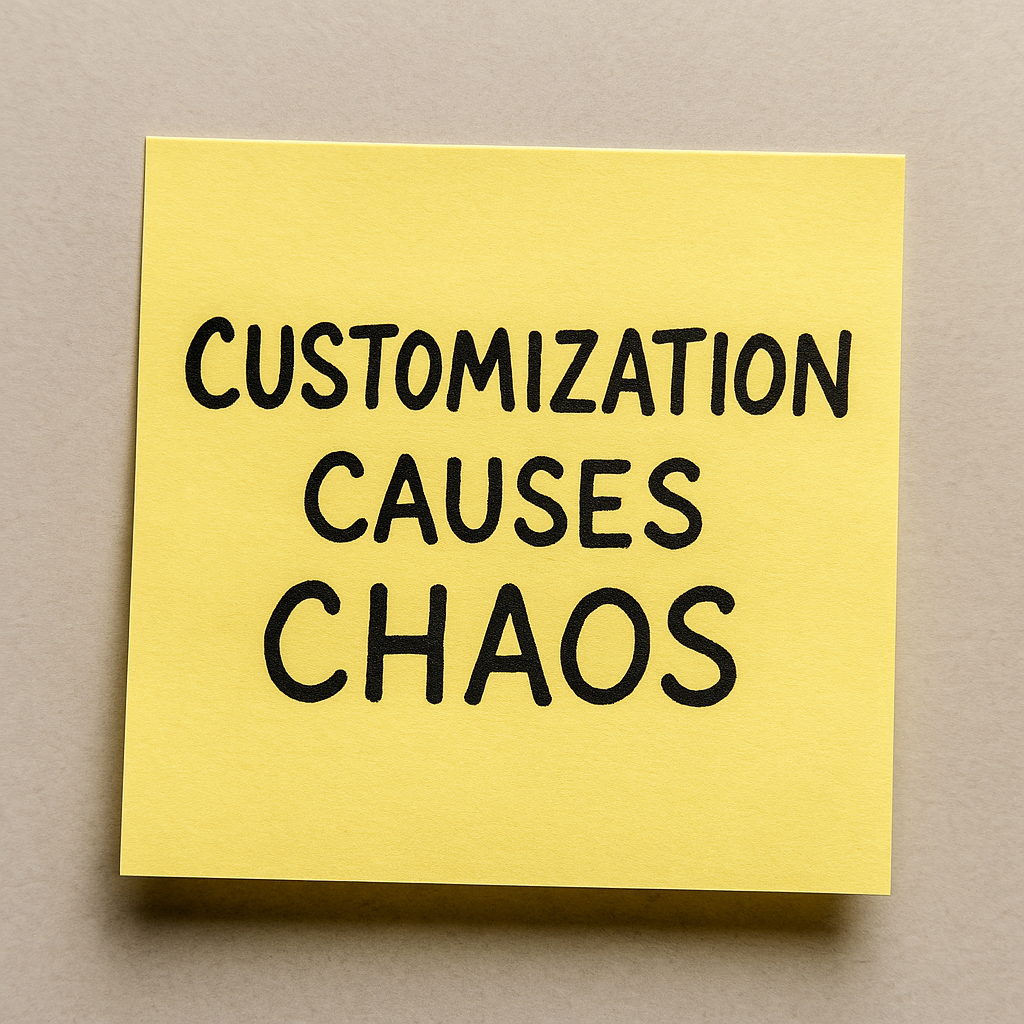
The iOS per-app VPN outage wasn’t about Apple or firewalls. It was about culture, an IT culture that allowed a shortcut instead of pushing for sustainable, supported, lifecycle-aligned solutions.
In today’s fast moving environment, customizations are not clever hacks. They are liabilities waiting to detonate.
If you want stability, scalability, and resilience, the path is clear: lean on vendor supported features, build lifecycle discipline, and resist the urge to customize.
Because eventually, as I’ve seen time and again, customization will come back to bite you.